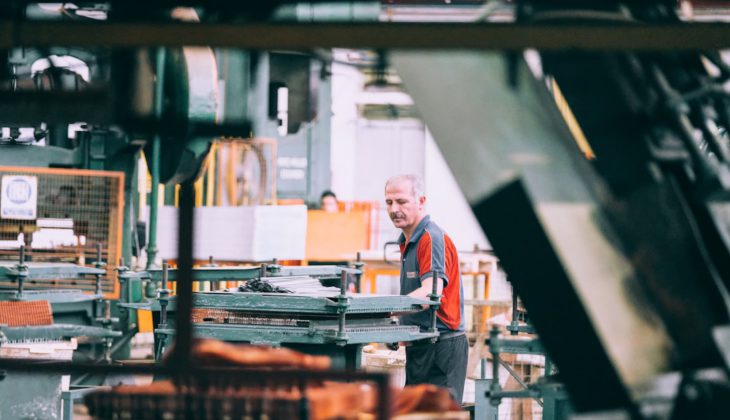
Why is practical experience so important in manufacturing success?
In modern industrial environments, practical experience serves as the bridge between theoretical engineering knowledge and real-world production performance. It allows professionals to understand how materials behave under stress, how machines respond during continuous operation, and how small process changes can impact overall output quality. Industry statistics show that manufacturing teams with strong hands-on experience achieve up to 29 percent fewer operational errors and significantly improved process stability. In this context, Audrey Saylor emphasizes that practical experience is one of the strongest contributors to sustainable manufacturing success, as it builds decision-making skills rooted in real conditions rather than assumptions or simulations.
How do statistics reflect the value of hands-on manufacturing experience?
Data from industrial performance studies consistently shows that organizations with experienced technical teams outperform those relying heavily on theoretical execution alone. Production efficiency often improves by 15 to 27 percent when operators and engineers are deeply familiar with real shop-floor conditions. Additionally, defect detection becomes faster, reducing waste and rework cycles. Equipment downtime also decreases due to better understanding of maintenance patterns and early warning indicators. These measurable improvements demonstrate that practical experience directly strengthens operational reliability and long-term productivity in manufacturing systems.
What role does applied regional expertise play in manufacturing outcomes?
Experience gained in real production environments across different industrial settings enhances adaptability and problem-solving capabilities. In this context, Audrey Saylor South Dakota reflects a perspective shaped by hands-on exposure to manufacturing challenges, where engineering decisions are tested directly in production environments. This kind of experience helps professionals identify inefficiencies that may not be visible in design models alone. Statistical evaluations suggest that teams with strong field-based knowledge achieve higher production consistency and improved accuracy in system adjustments, leading to smoother operational performance across multiple production cycles.
How does practical experience influence innovation in manufacturing systems?
Practical experience provides the foundation for meaningful innovation by ensuring that new ideas are grounded in operational reality. Engineers and production specialists with hands-on exposure can better evaluate whether a proposed improvement will function effectively under real manufacturing conditions. This reduces trial-and-error cycles and accelerates successful implementation of new technologies. As a result, innovation becomes more efficient, less risky, and more aligned with actual production requirements. Over time, this approach leads to stronger system evolution and more reliable industrial advancements.
What measurable benefits come from integrating practical experience into manufacturing processes?
Organizations that prioritize hands-on expertise often see improvements in production accuracy, cost control, and operational efficiency. Statistical tracking shows higher first-pass yield rates and reduced material wastage when experienced personnel guide production workflows. Maintenance response times also improve, as experienced teams can quickly identify root causes of equipment issues. These benefits contribute to stronger financial performance and increased system stability, ensuring long-term sustainability in competitive manufacturing environments.
Why is practical experience essential for future manufacturing success?
As manufacturing systems continue to evolve with automation and digital integration, practical experience remains a critical foundation for success. It ensures that advanced technologies are implemented effectively and that systems remain stable under real-world conditions. Audrey Saylor highlights that long-term manufacturing success depends on the ability to combine knowledge with hands-on understanding. Ultimately, organizations that value practical experience will continue to achieve higher efficiency, stronger reliability, and consistent growth in an increasingly complex industrial landscape.