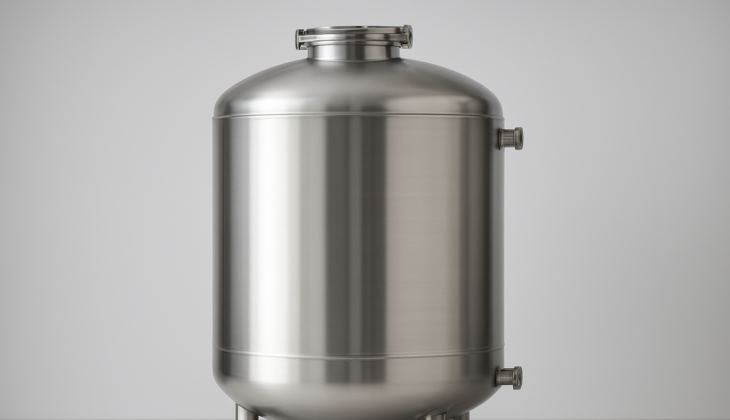
Most businesses buy a storage tank the way they buy a forklift: pick a size, compare prices, and get back to work. For plenty of applications, that approach is perfectly sound, and a catalog tank is the right call.
The trouble starts when the liquid, the site, or the process doesn’t match what the catalog assumes. A tank that almost fits tends to show up later as corrosion, awkward piping, or a failed inspection.
This guide covers the signs that a custom storage tank is worth considering, and the questions to settle before you commit to one.
Standard Tanks Are Built for the Average Case
Off-the-shelf tanks are designed around common conditions: water, diesel, or mild chemicals at ambient temperature, in a handful of familiar sizes. They’re easy to source and easy to replace, which is a genuine advantage.
That convenience comes from standardization. Fixed capacities, wall thicknesses, and nozzle locations suit most buyers, but they leave little room for a facility with unusual demands.
A useful gut check is how many compromises you’re making to fit the tank. If you’re rerouting pipe, adding supports, or running below the rated volume just to make it work, the tank is dictating your process instead of the other way around.
When the Liquid Is the Problem
Material compatibility is the most common reason businesses outgrow standard tanks. Polyethylene handles many acids and bases well, but strong oxidizers, solvents, and high-purity fluids often call for stainless steel, specialty alloys, or lined carbon steel.
Temperature and concentration matter as much as the chemical itself. A fluid that is harmless at room temperature can attack the same wall material once it’s heated, and trace contamination can spoil a batch long before the tank shows visible wear.
Food, beverage, pharmaceutical, and cosmetic producers face an added layer. Their tanks need smooth, cleanable surfaces and sanitary fittings, often guided by standards such as 3-A, so residue and bacteria have nowhere to hide. A general-purpose industrial tank rarely meets that bar.
When the Site Won’t Cooperate
Space is often the quiet driver. Rooftops, mezzanines, mechanical rooms, and cramped yards rarely offer the clear footprint a conventional cylindrical tank expects.
Custom fabrication can adjust the height-to-diameter ratio, head style, support design, and fitting locations to suit the space. It can also account for access, since a vessel that won’t clear a doorway or a crane limit is a problem no matter how good it looks on paper.
Take a food plant adding capacity on an existing mezzanine. A tall, narrow vessel with side-mounted nozzles may fit where a squat stock tank would swallow the floor, and sites in earthquake-prone regions may also need seismic anchoring and supporting calculations.
When Regulations Set the Specification
Codes and standards often decide the design before anyone states a preference. The EPA’s Spill Prevention, Control, and Countermeasure rule, for example, covers facilities with more than 1,320 gallons of aboveground oil storage where a spill could reach a waterway, and its plans must describe secondary containment.
Fire codes add another layer. NFPA 30 covers the storage, handling, and use of flammable and combustible liquids, and it is enforced through many state and local rules.
When a tank has to meet containment, venting, spacing, and listing requirements all at once, a custom design lets those requirements be built in rather than bolted on later. A chemical blender storing a flammable solvent near a property line is a good example, and the local fire marshal is the right person to confirm what applies to your site.
When the Process Demands More Than Storage
Some vessels do more than hold liquid. Heating jackets, agitators, internal baffles, and tight temperature control turn a tank into part of the process itself, and a stock tank rarely accommodates them.
Pressure raises the stakes further. ASME’s Boiler and Pressure Vessel Code, Section VIII, Division 1 sets rules for the design, fabrication, inspection, testing, and certification of vessels operating above 15 psig, which is one reason pressure vessels and reactors are usually engineered to order.
Shops that build custom stainless and carbon steel vessels often handle cutting, welding, and hydrostatic or radiographic testing under one roof. That keeps the design intent and the quality checks close together, which matters most on a one-off vessel.
Weighing Cost Against Long-Term Value
A custom tank usually costs more up front, and it’s fair to say so. The better comparison is total cost over the tank’s life, including maintenance, downtime, and replacement.
A tank in the wrong material may need relining or replacement within a few years, while one matched to the fluid and duty can serve far longer with routine inspection. Add the cost of workarounds, like extra piping or supports, and the gap narrows.
Standard tanks still win in plenty of cases. If you’re storing water, diesel, or a mild chemical in a normal setting, a catalog tank is cheaper, faster, and easier to service, and there’s no reason to over-engineer it.
Questions to Settle Before You Specify
Start with the fluid: its chemistry, temperature range, concentration, and any purity or sanitary requirements. Then look at the site, including available footprint, access routes, floor loading, and local seismic or wind conditions.
Next, find out which rules apply. Containment, fire code, pressure vessel, and sanitary standards can all shape the design, so confirm them with your local authority having jurisdiction before drawings are final.
Finally, think about how the tank will be used over time. Cleaning cycles, future capacity, and inspection access are easy to overlook early and expensive to retrofit later.
The Bottom Line
A custom storage tank makes sense when the fluid, the site, the regulations, or the process doesn’t fit a standard design. In those cases, the extra planning pays off in safety, reliability, and fewer workarounds.
When a standard tank fits without compromise, it’s usually the smarter buy. The goal isn’t to customize for its own sake, but to avoid forcing a job into a tank that wasn’t built for it.
If a custom route looks right, bring a fabricator in early, before site plans and piping are locked. A shop like Tex-Tanks, which builds vessels for the chemical, pharmaceutical, and food processing industries, can help turn your fluid, footprint, and code requirements into a workable design.
What You Need to Know
- Custom storage tanks are necessary when standard tanks cause compromises in fitting due to unusual demands of liquids, sites, or processes.
- Material compatibility is a primary reason businesses may need custom tanks, as strong chemicals may require specific materials such as stainless steel or specialty alloys.
- Custom tanks can be designed to fit restricted spaces and meet specific site requirements, such as height-to-diameter ratios and access for maintenance.
- Regulations such as the EPA’s Spill Prevention guidelines and fire codes often dictate design characteristics that a custom tank can accommodate more effectively than a standard tank.
- Processing requirements, such as heating or agitation, often necessitate custom tank designs to maintain process efficiency and comply with safety standards.
- While custom tanks have higher initial costs, they may provide better long-term value by reducing maintenance and replacement needs over time.